
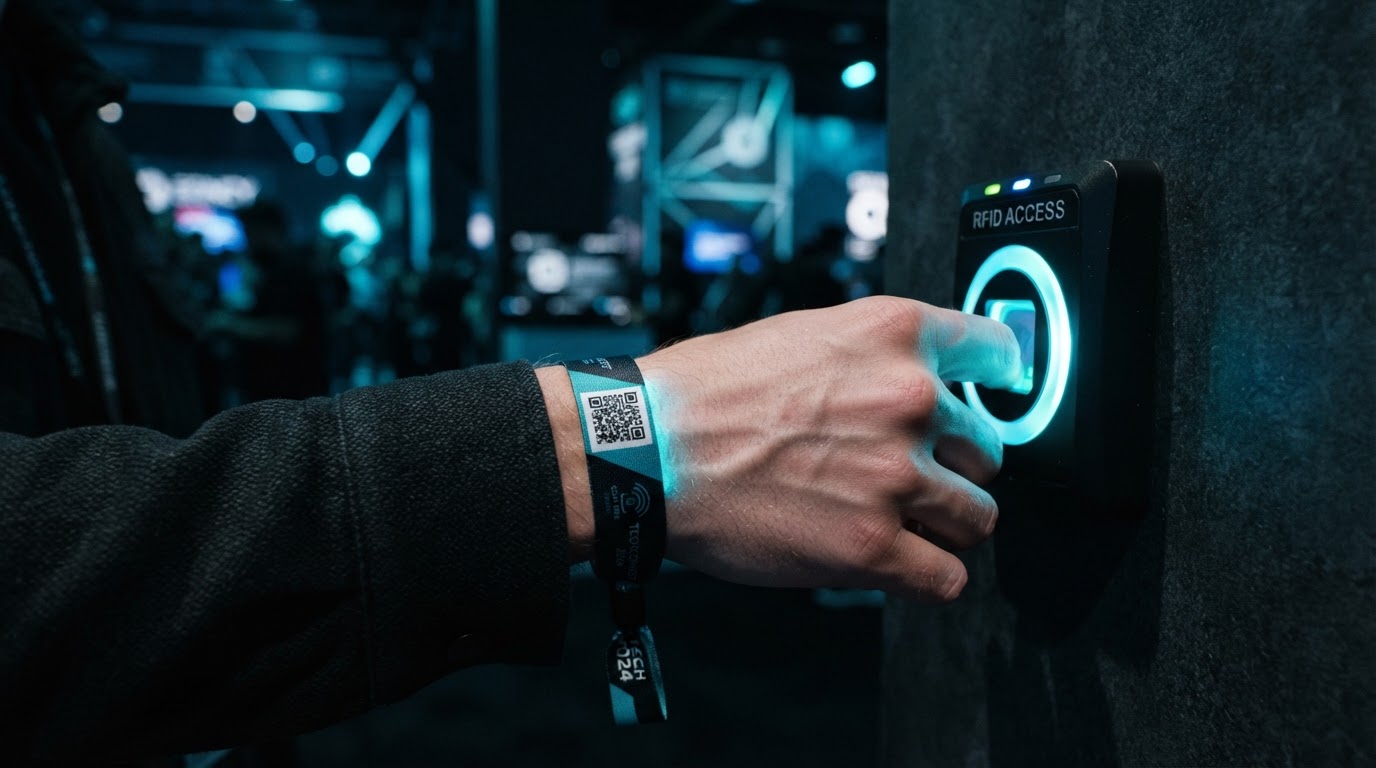
QR code vs RFID wristbands in Nigeria: how they differ, what they cost, and which one suits your Lagos event. A practical guide for organisers.
Here is a conversation I have often. An organiser calls and says, "Emeka, I want the latest technology at my gate. Give me RFID, give me everything." Then I ask: how many people are you expecting, and how many days is the event? And the answer is 800 guests, one night.
That is when I tell them, abeg, calm down. You may not need a rocket to cross the road.
QR code wristbands and RFID wristbands both solve the same problem: knowing who belongs where. But they work differently, cost differently, and suit different events. Let me break it down in simple language so you can choose the right one for your event in Lagos and save yourself money and stress.
What is a QR code wristband?
A QR code wristband carries a printed square code. A staff member scans it with a smartphone or a scanner, and the code links to a record in your event system. That record tells you the ticket type, the guest's access level and whether the ticket has already been used.
In simple terms: scan, check, enter. A scan takes only a couple of seconds, and because most people already have smartphones, you often do not need special equipment.
QR codes can be printed on Tyvek or vinyl wristbands, so you can combine them with colour-coding for access levels. For example, a wristband can carry a colour for VIP and a QR code for scanning at the gate.
What is an RFID wristband?
RFID stands for radio-frequency identification. An RFID wristband has a tiny chip and antenna built in. Instead of pointing a camera at a printed code, the guest taps or waves the wristband near a reader, and the system recognises the chip.
Because there is no need to line up a camera with a code, RFID is faster at high volume. It also allows extra features such as cashless payments at bars and food stalls, zone-by-zone access control and detailed data on how guests move around.
How they differ
| Factor | QR code wristband | RFID wristband | | --- | --- | --- | | How it is read | Camera or scanner, needs line of sight | Tap or wave near a reader | | Equipment | Smartphones or basic scanners | RFID readers and software | | Cost | Lower | Higher (chips and readers) | | Speed at the gate | Fast, a few seconds per scan | Very fast, tap-and-go | | Cashless payments | Not on-band | Yes, with the right setup | | Internet needed | Often yes, to check the database | Can work with patchy connectivity depending on setup | | Best for | Small to mid-sized events | Large, complex or cashless events |
When QR code wristbands make sense
Industry guidance suggests QR wristbands are a good fit when attendance is under about 2,000, when the event runs for a single day, when your budget is tight, when entry is the main thing you need, or when you do not have much time to prepare. That describes a huge number of events in Lagos: club nights, comedy shows, product launches, school events, mid-sized concerts and parties.
Other advantages:
- Lower cost. You can print QR codes directly on affordable wristbands.
- Easy to set up. Most teams already know how to use a phone.
- Linked to your ticketing. Each code connects to one ticket, so duplicates get flagged.
- Extra value. A QR code can also point guests to your programme, map or sponsor page.
Clock it: QR wristbands need the code to be visible and in good condition. Heavy scrubbing, creasing or smudging can make a code hard to read, so ask for quality printing and handle the bands with care.
When RFID wristbands make sense
RFID shines when the event is big, complex or cashless. Think of a multi-day festival with thousands of guests, multiple access zones, backstage areas, VIP lounges and bars. In those cases the speed, the zone control and the data justify the higher cost.
Advantages include:
- Tap-and-go speed for big crowds.
- No need for a smartphone on the guest's side.
- Cashless payments at vendors, so guests do not have to carry cash.
- Better data on movement, peak times and spending.
The trade-offs are the cost of the chips and readers, setup time, and the need to train your staff. It is a bigger investment, so use it only if you will use the features.
What about Nigerian realities?
Let's be honest about the Lagos environment.
Network. Mobile data can be unreliable at crowded venues. If your QR scanning relies on a live connection, plan for backup: offline mode if your system supports it, or a printed guest list.
Power. Phones and scanners need charge. Bring power banks and charging stations for your gate team. "No light, no scan."
Smartphones. Your staff can use their phones for scanning, but make sure the devices are fully charged and the scanning app is tested before event day.
Budget. Many Nigerian organisers run on tight margins. A well-run QR setup can give you most of the security benefits at a fraction of the cost of RFID.
Cash culture. Cashless wristband payments are a great idea in theory, but they depend on vendor buy-in and guest education. Do not add that complexity unless your team is ready.
A simple decision guide
Choose QR code wristbands if:
- You expect under about 2,000 guests
- Your event runs for one day or a weekend
- Entry control is your main goal
- Your budget is limited
- You are planning on short notice
Choose RFID wristbands if:
- You expect large crowds with several access zones
- You want cashless payments at bars and stalls
- You need detailed attendee data and sponsor reporting
- Your budget and timeline can support setup and training
Choose a mix if: you want QR on the wristband for general entry and a more advanced system for a VIP or sponsor area.
Whatever you choose, do not skip these basics
- 1Unique codes. Every wristband must map to one ticket.
- 2Tamper-evident bands. A tech-enabled wristband that anyone can remove and hand over is a weak link. Use a secure closure.
- 3A fallback plan. If scanners fail, have a backup list and a trained team.
- 4Staff training. Your team should know how to scan, what each colour means and how to handle flagged tickets calmly.
- 5A test run. Scan sample wristbands before the event. Do not make your first test in front of 3,000 people.
Frequently asked questions
Are QR code wristbands safe? They are safe when each code is unique and checked against a live system that marks it as used. Pair them with tamper-evident wristbands for the best results.
Is RFID better than QR? Not always. RFID is faster and more powerful for big, complex events, but QR is cheaper, simpler and plenty for many events. It depends on your size, budget and goals.
Do QR wristbands need internet? Often yes, because the scan checks a database. Ask about offline options and always prepare a backup.
Can I get QR wristbands in Lagos? Yes, we can print QR and barcode wristbands and link them to your ticket sales.
How much do they cost? Price depends on the material, quantity and printing. Send us your numbers and we'll give you a clear quote.
Let's set up your gate
Tell us your event type, expected numbers and date, and we'll recommend the right setup for your event, "sharp sharp."
Get in touch on WhatsApp, or enquire about wristbands and explore our event wristbands in Lagos.
Related reading: How Much Do Event Wristbands Cost in Nigeria? · How to Plan a Concert or Festival in Lagos