
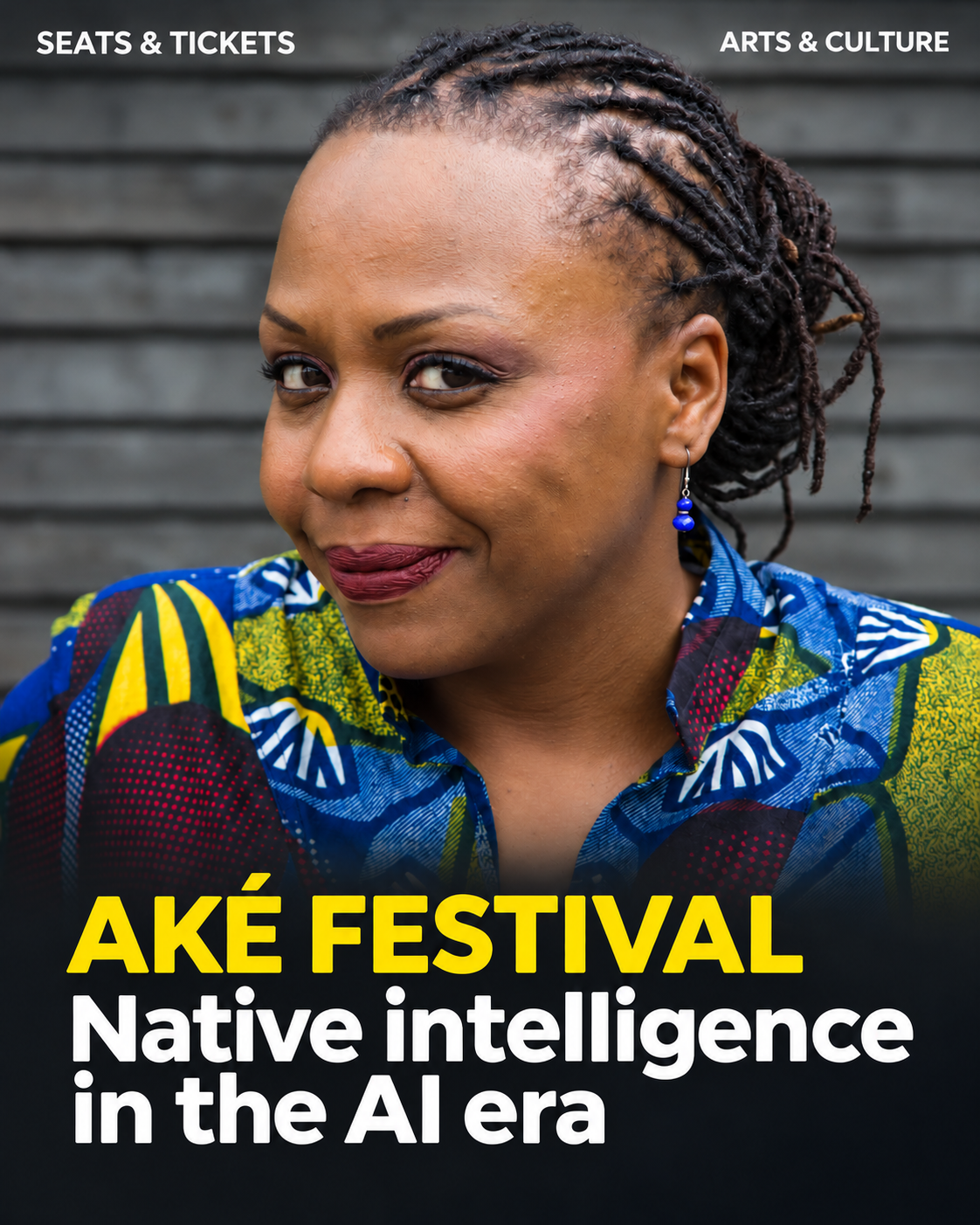
Aké Festival 2026 is in Lagos with the Native Intelligence theme. See what it means, today's programme, and how to plan your visit.
Native Intelligence puts African knowledge and creative work at the centre of this year's festival, with books, music, animation and poetry as the festival reaches its final day in Ikeja.
Most festivals open with a welcome. Aké opened with a question.
On Thursday, 19 November, founder Lola Shoneyin took the floor at Silkwood Hotel in Ikeja GRA and asked the audience to think about the knowledge that travels through people and communities, not just the kind handed out in classrooms. THISDAY's opening report places African ancestral knowledge, indigenous languages and emerging technology at the centre of this year's Aké Arts and Book Festival.
The three-day event, run by the Book Buzz Foundation, reaches its final day today, Saturday, 21 November. If you read, write, perform or organise events, this year's theme deserves your attention. Here is what the festival is really asking, where the question comes from, what is left on today's programme, and how to get real value from your visit.
What does "Native Intelligence" actually mean?
In its official press material, Aké describes Native Intelligence as an exploration of ancestral knowledge and emerging technologies. Read that slowly. Two ideas sit side by side: what a community knows through lived culture, and the new tools changing how creative work gets made.
Here is one way in. Think of the proverb a grandparent drops into a conversation at exactly the right moment. It teaches, it corrects, it carries history, and nobody gave you a certificate for learning it. That is knowledge rooted in a language and a community.
Now ask what happens to that knowledge when writers, musicians and filmmakers start debating artificial intelligence. Who explains it? Who gets quoted? Whose version reaches the page?
That is the question running under this year's programme, and it is a sharp one. As writers and other creative workers discuss AI, the festival asks something more specific: how should knowledge rooted in a language, a community or a tradition enter the conversation about the future of creative work?
Notice what the theme does not do. It does not ask you to pick a side for or against technology. It asks you to look at who is in the room when the future gets described.
A festival with a long memory
To see why this question suits Aké, it helps to know where the festival began.
Aké takes its name from the town in Abeokuta, Ogun State, where Wole Soyinka was born, according to The Guardian Nigeria. Lola Shoneyin founded the festival in 2013, a year after setting up the Book Buzz Foundation. The first edition ran from 19 to 24 November 2013 at the Cultural Centre in Kuto, Abeokuta, under the theme The Shadow of Memory. Shoneyin has said she wanted a space where thinkers could talk about African issues on African soil.
The festival has grown and moved since then. Its first outing in Lagos came in 2018, under the theme Fantastical Futures, as the Johannesburg Review of Books reported at the time. It publishes its own magazine, the Aké Review, in English, Yorùbá and French. And it has earned international attention: the Frankfurt Book Fair's Aficionado Award went to Aké.
Look at that run of themes. Memory. Futures. Now native intelligence. It reads like one long conversation about where African creativity has come from, where it is heading, and who holds the knowledge that connects the two. That pattern is our reading, not an official line, but it explains why the 2026 theme feels like the next chapter rather than a passing trend.
How to read, watch or listen with the theme in mind
A big theme is easy to nod along to and hard to use. So make it practical. Take it into the work itself.
When you pick up a novel, a comic or sit down for a performance, try three questions:
- Which language does a character speak? And when they switch, what changes?
- Who explains the setting? An insider, an outsider, or nobody at all?
- What does the audience need to understand without being told?
These are choices a writer makes. Language and setting are never accidents. Looking closely at them gives you a way to talk about creative work that does not let the tools used to produce it dominate every conversation. It works on a Nollywood film, a graphic novel or a poem read aloud. It works whatever technology sits behind the finished piece.
That is the real gift of a theme like this. It sharpens how you pay attention.
More than books: the library on screen
Aké bills itself as an arts and book festival, and the programme shows why both words matter. QED's festival preview describes a mix of book discussions, panels, film, poetry and music.
One item stands out. QED reports a screening of How to Build a Library, a documentary about efforts to restore Nairobi's McMillan Memorial Library. Putting a public library on the same programme as fiction and performance widens the conversation. It reminds us that knowledge needs places as well as people: rooms where books are kept, borrowed, argued over and passed on.
If Native Intelligence asks who holds knowledge, the library question asks where it lives. Both matter for anyone thinking seriously about culture.
The books and writers people are talking about
The advertised conversations include some of the most closely followed names in African writing. QED identifies Death of the Author as Nnedi Okorafor's book for discussion and The Fist of Memory as Wole Talabi's. Chika Unigwe's Grace is also part of the advertised line-up.
Here is a habit worth borrowing from serious readers: never walk into a session cold.
- 1Read an extract before the session. Even a few pages gives you a feel for the voice.
- 2Write down one question. Make it specific. "What did you want the reader to feel in that opening scene?" beats "What inspired you?"
- 3Stay open. You do not have to agree with a speaker to get something from the exchange.
A specific question gives the conversation somewhere to go. It also makes you the kind of audience member writers remember.
Your Friday and Saturday guide
The published programme listed these sessions for the second and third days. Friday's were scheduled for yesterday and Saturday's are on today. Treat them as scheduled sessions, not guarantees, and check the current programme before you travel.
| Day | Time | Session | |---|---|---| | Friday, 20 November | 15:25 to 16:25 | Built to Last | | Friday, 20 November | 19:00 to 20:30 | Savy Henry music session | | Saturday, 21 November | 09:50 | Nigerian comics and animation panel | | Saturday, 21 November | 16:30 | Book chat with Nnedi Okorafor and Wole Talabi | | Saturday, 21 November | 19:00 onwards | Palm Wine and Poetry |
Source: the official Aké 2026 programme.
You might arrive for one author and stay for the music. You might use a panel to follow up a question a book raised. The programme gives you room to build your own day, so decide what you came for first. Start with the form you enjoy most, whether that is the page, the screen, the stage or the mic, then pick the question you want to carry into the room.
If you are heading out today, Saturday offers plenty of range. The 09:50 comics and animation panel looks at Nigerian visual storytelling. The 16:30 book chat brings two celebrated authors together. Palm Wine and Poetry takes over from 19:00, which is about as Lagos a finish as a literary festival can offer.
For event organisers: why Built to Last matters
If you run events, workshops, conferences or community gatherings, Built to Last was one to watch. It was scheduled for Friday, 20 November, and the organisers' press material frames it around sustaining literary festivals.
Think about what that means. Plenty of people can launch an event. Far fewer keep one alive across editions, through changing budgets, shifting audiences and new competition for attention. Aké itself has done it for well over a decade, which gives the topic extra weight.
If you caught the session, or when you read coverage of it, look for three things:
- How the speakers keep audiences coming back. What reasons do they give people to return?
- What choices they describe. Where did they hold firm, and where did they adapt?
- What fits your own event. Not every lesson scales. Pick the ones that match your resources and your audience.
Take notes with your own event in mind. A strong session gives you a list of questions to test, not a template to copy.
Before you go: practical checks
Festival day goes better when the basics are sorted early.
- Venue: Silkwood Hotel, 261 Sobo Arobiodu Street, Ikeja GRA.
- Programme: Sessions can shift. Check the current programme for changes before you set out.
- Registration: Confirm registration arrangements directly with the festival. An advertised session time does not establish admission terms or guarantee you a place.
- Your plan: Pick one or two sessions you refuse to miss, and treat the rest as a bonus.
Give yourself time for Ikeja traffic. Missing the first ten minutes of a session you travelled across the city for is a painful way to start.
The takeaway
Aké's 2026 question is simple to state and hard to answer: whose knowledge shapes the future of creative work? You do not need a festival pass to start thinking about it. Ask it when you read your next novel. Ask it when you plan your next event. Ask it when you decide whose voice gets the microphone.
The best festivals do not hand you answers. They send you home with better questions. On the evidence of its opening, Native Intelligence is doing exactly that.
---
Related reading: For other cultural outings, explore our guide to art exhibitions and festivals in Lagos and Nigeria and our event ticketing and check-in guides.